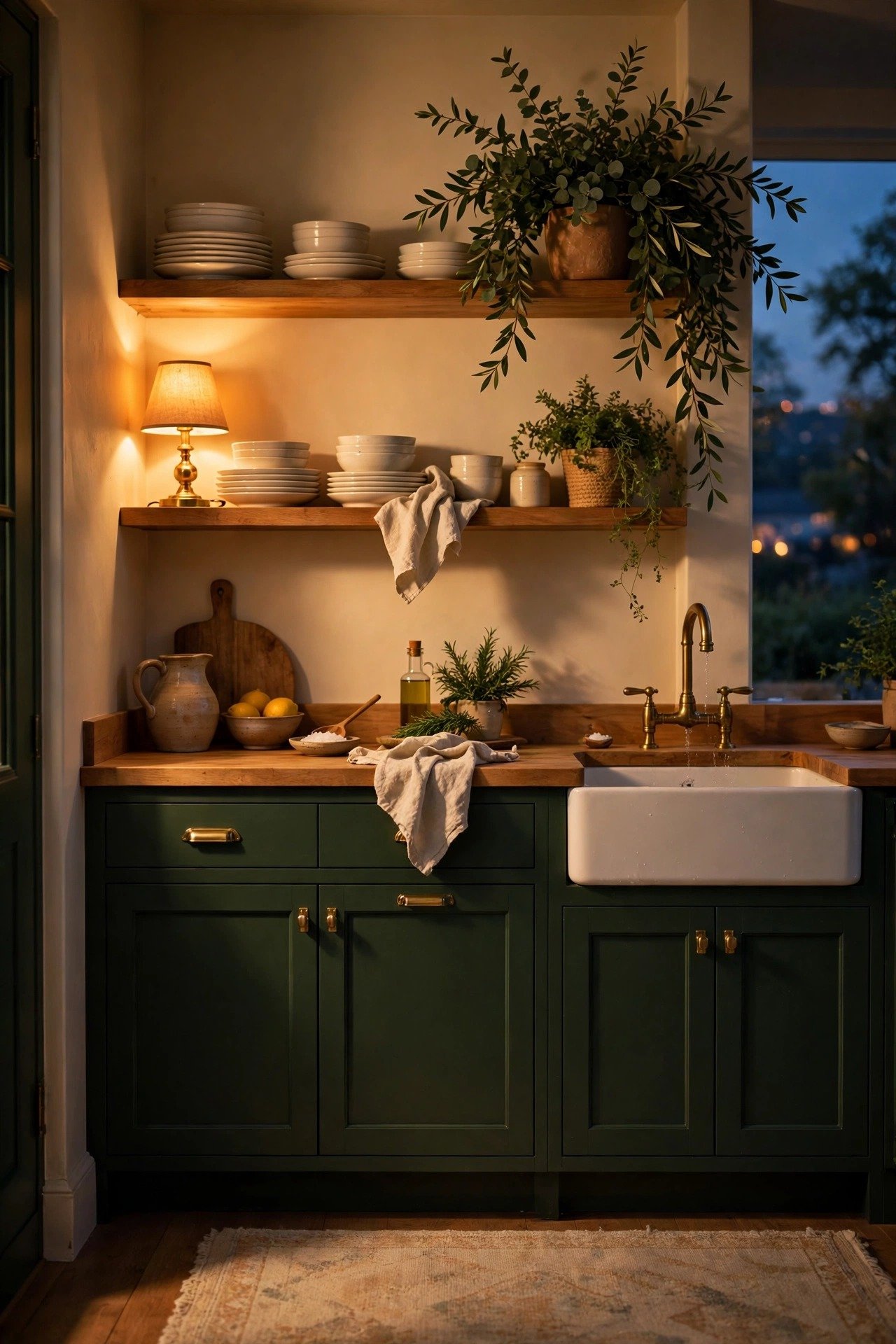

Open shelves promise a light, airy kitchen. Most of them end up crowded instead.
The problem is not the shelves. It is the rule most people style by — put everything you own on display and hope it looks good.
There is a simpler rule. For every three things on a shelf, two should earn their place by being useful, and one by being beautiful.
That is the one-in-three rule.
The One-in-Three Rule
The rule is a ratio, not a recipe. Two-thirds useful, one-third decorative, on every shelf.
Useful means you reach for it every week — plates, bowls, glasses, mugs. Decorative means it is there to look at — a vase, a plant, a wooden board.
Count any shelf in threes. Three plates and one small vase is the rule working. Three vases and no plates is a display cabinet, not a kitchen.
When a shelf looks crowded, it is almost always too decorative. Take one decorative thing away and the shelf breathes again.
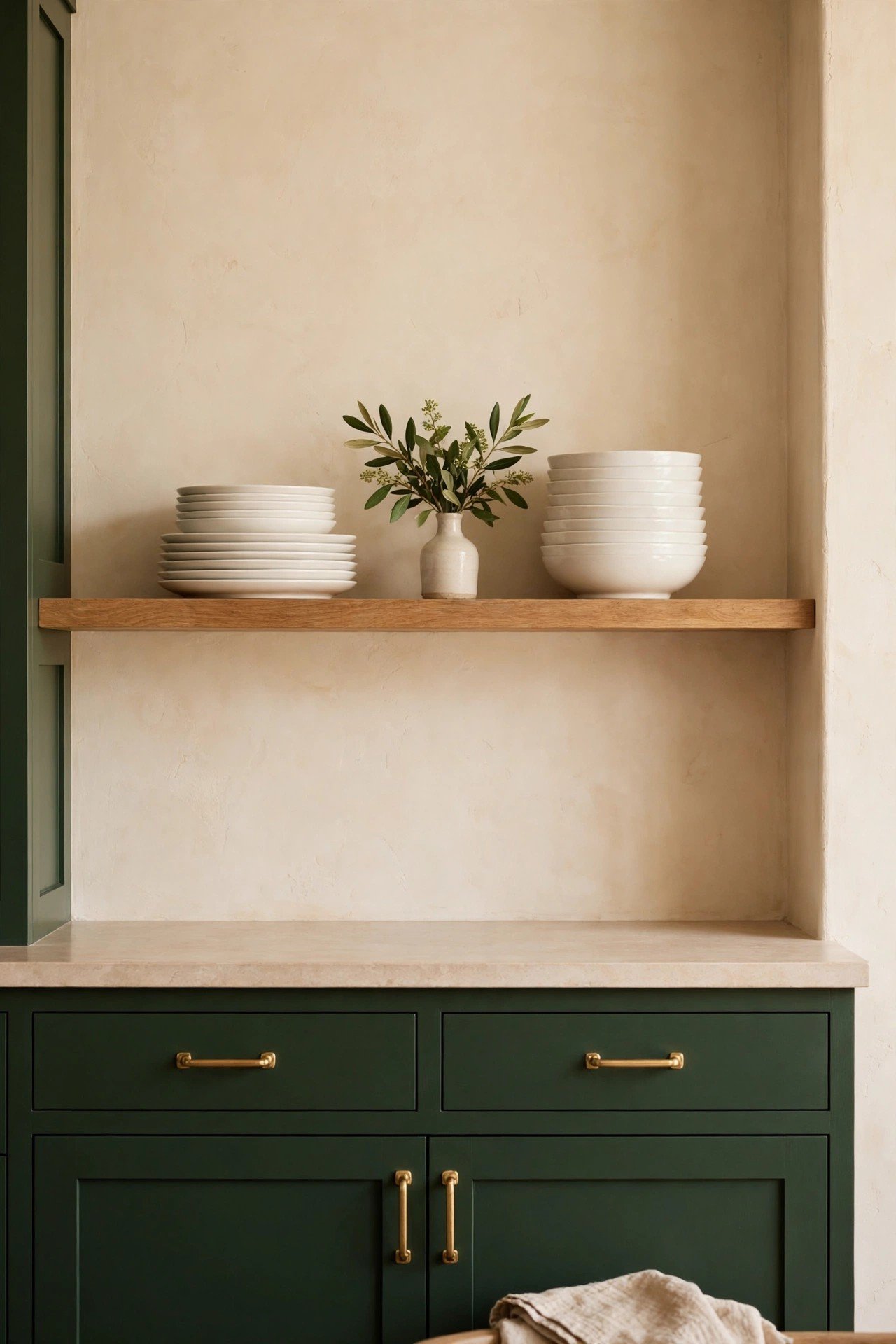
Before You Style: Reset the Shelves
A styled shelf starts empty. You cannot arrange around things you have not chosen.
1. Empty Every Shelf
Take everything off the shelves. Every plate, every jar, every plant.
An empty shelf shows you the space you actually have. A full shelf only shows you the clutter you already own.
Wipe the shelf as you go. Dust settles on open shelves faster than inside cabinets, and a clean shelf makes everything on it look better.

2. Edit Hard: Keep What You Use and Love
Sort everything into three piles: use weekly, love to look at, and neither.
The weekly pile goes back on the shelves. The loved pile goes back sparingly — one or two pieces per shelf, no more.
The neither pile leaves the kitchen. Give it away, store it elsewhere, or let it go. A shelf cannot look calm while it holds things nobody uses or loves.

3. Clean the Shelf and the Wall
Open shelves show everything, including dust and grease. Clean the shelf surface and the wall behind it before anything goes back.
A pale wall behind open shelves does quiet work. It makes white dishes glow and dark wood stand out.
If the wall is stained or dark, a fresh coat of warm white paint wakes the whole shelf up.
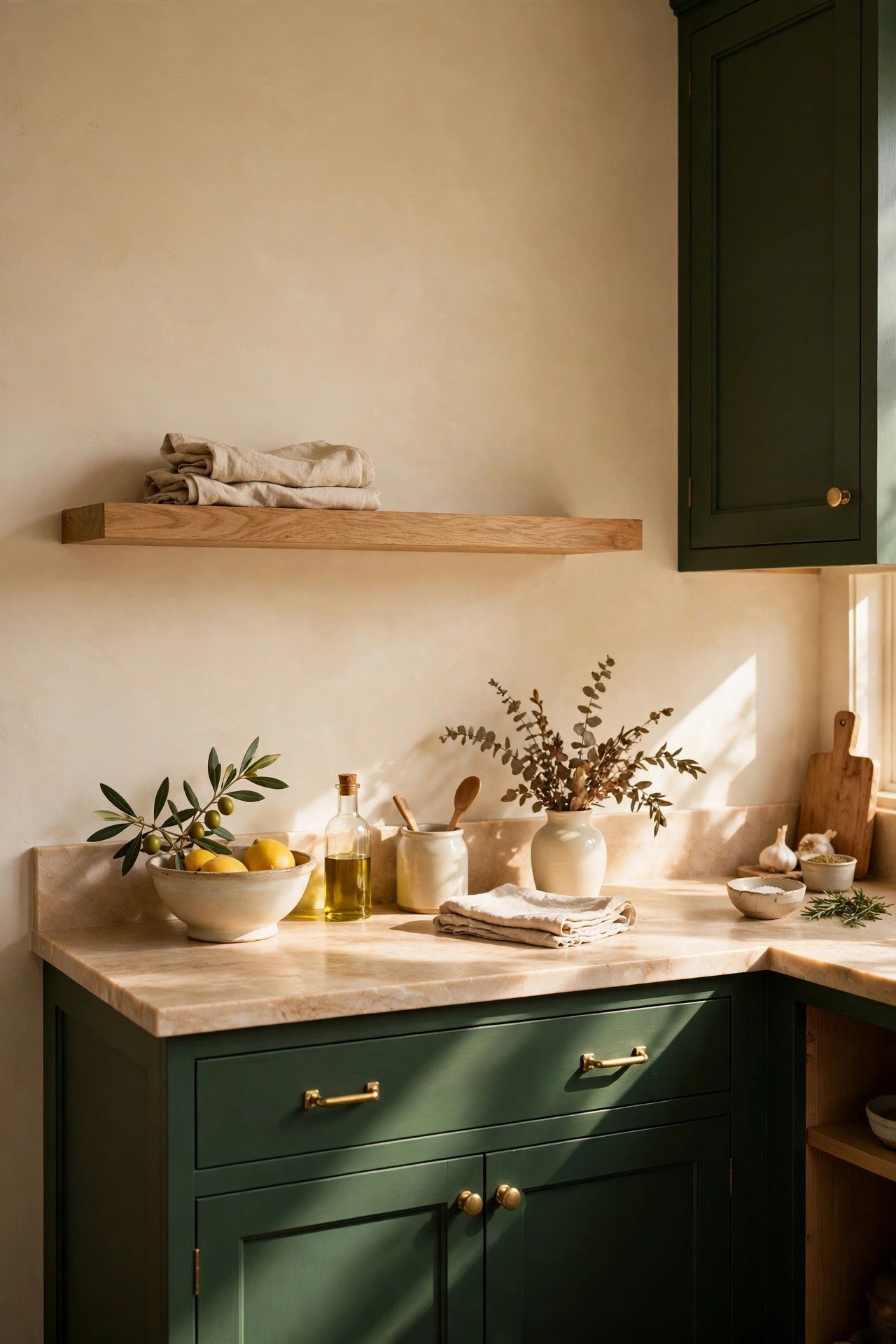
The Shelf Formulas
Six formulas do the styling work. Learn them once and every shelf follows.
4. Build Height Triangles
The eye likes triangles. Put the tallest item at one end, a medium item in the middle, and the shortest at the other end.
A tall vase, a stack of bowls, and a small jar make a triangle. Three items of the same height make a flat line, and flat lines look dull.

5. Leave 20–30% Empty Space
Negative space is not wasted space. It is what lets the eye rest.
Leave about a quarter of each shelf empty. If a shelf is full edge to edge, take one group away and see how the rest suddenly looks intentional.
Empty space also makes the kitchen easier to use. You can lift a plate out without sliding three others first.

6. Repeat Two or Three Finishes
Pick two or three finishes and repeat them on every shelf. White ceramic, warm wood, and one metal is enough.
Repetition is what makes mixed dishes look like a collection. Without it, every shelf looks like a different kitchen.
Keep the third finish small — brass handles on jars, or the rim of a wooden board.

7. Heavy Items Low, Light Items High
Heavy things belong on the lowest shelf. Stacks of plates, cast iron, and big mixing bowls sit low and steady.
Light things go high. Glasses, small jars, and plants live on the top shelf, where their weight never matters.
A heavy stack at eye level is a strain to lift and a risk to drop.

8. Stack Plates, Line Up Bowls
Plates stack. Bowls nest. Glasses line up in a row.
Stacking turns ten plates into one tidy shape, and five lined-up bowls read as one calm group.
Keep stacks short — six plates at most. A tall stack wobbles, and nobody enjoys lifting plates from the bottom of a tower.

9. Group in Odd Numbers
Groups of three or five look settled. Groups of two or four look like a pair that lost something.
Three mugs together make a group. Five small jars make a collection. One lone mug on a shelf looks forgotten.
Three small plants beat two large ones, and five tiny jars beat four.
What Earns a Spot — and What Does Not
The rule decides what stays. Two-thirds useful, one-third decorative, on every shelf.
10. Two-Thirds Useful: Everyday Dishes and Glassware
Everyday plates, bowls, glasses, and mugs earn their spot by being used. If you reach for it weekly, it belongs on the shelf.
Keep the everyday dishes together. Plates on one shelf, bowls on the next, glasses above. Reaching for dinner should take seconds, not a search.
Match the everyday set loosely — same color family, not identical pieces.

11. One-Third Decorative: One Vase, One Plant, One Board
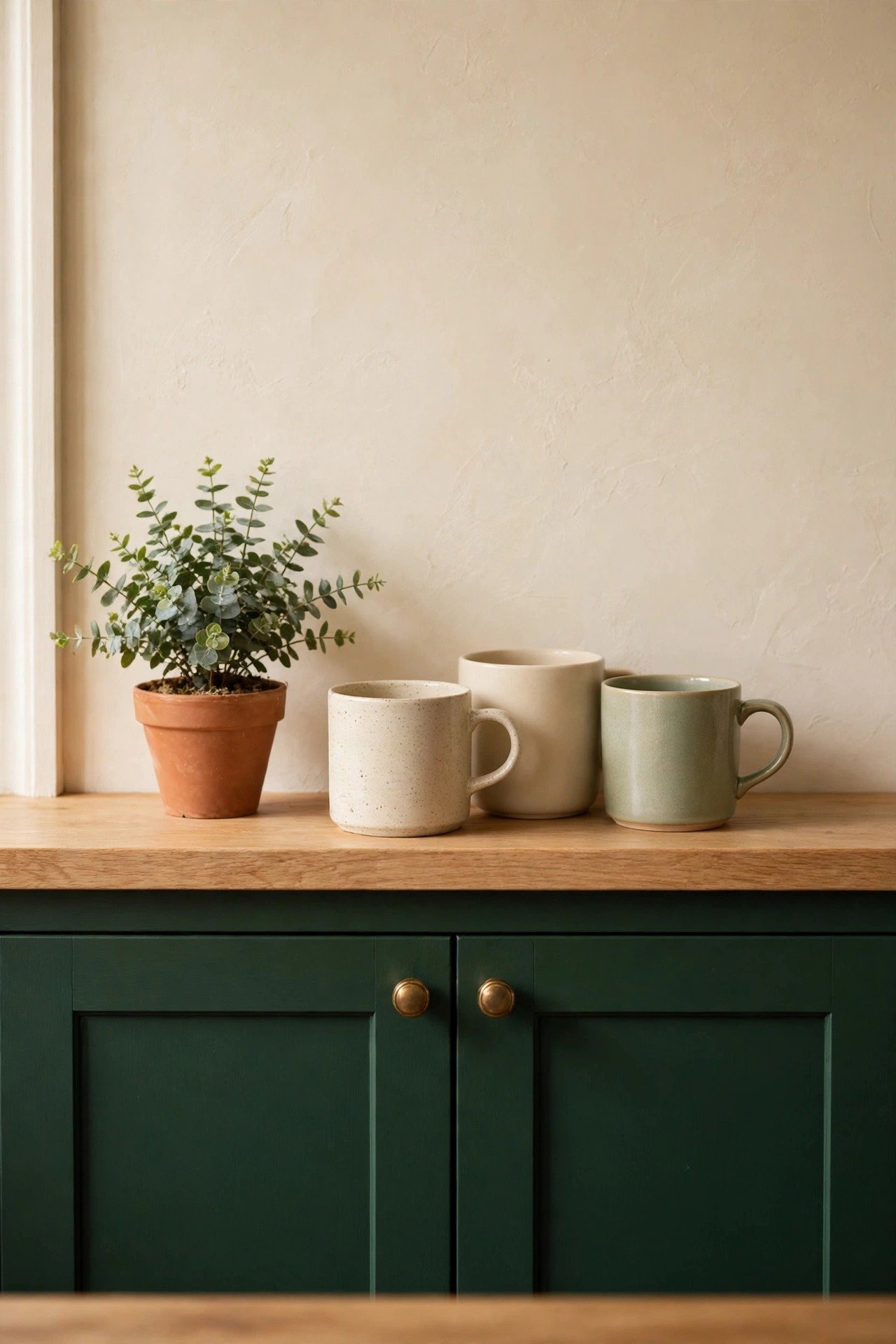
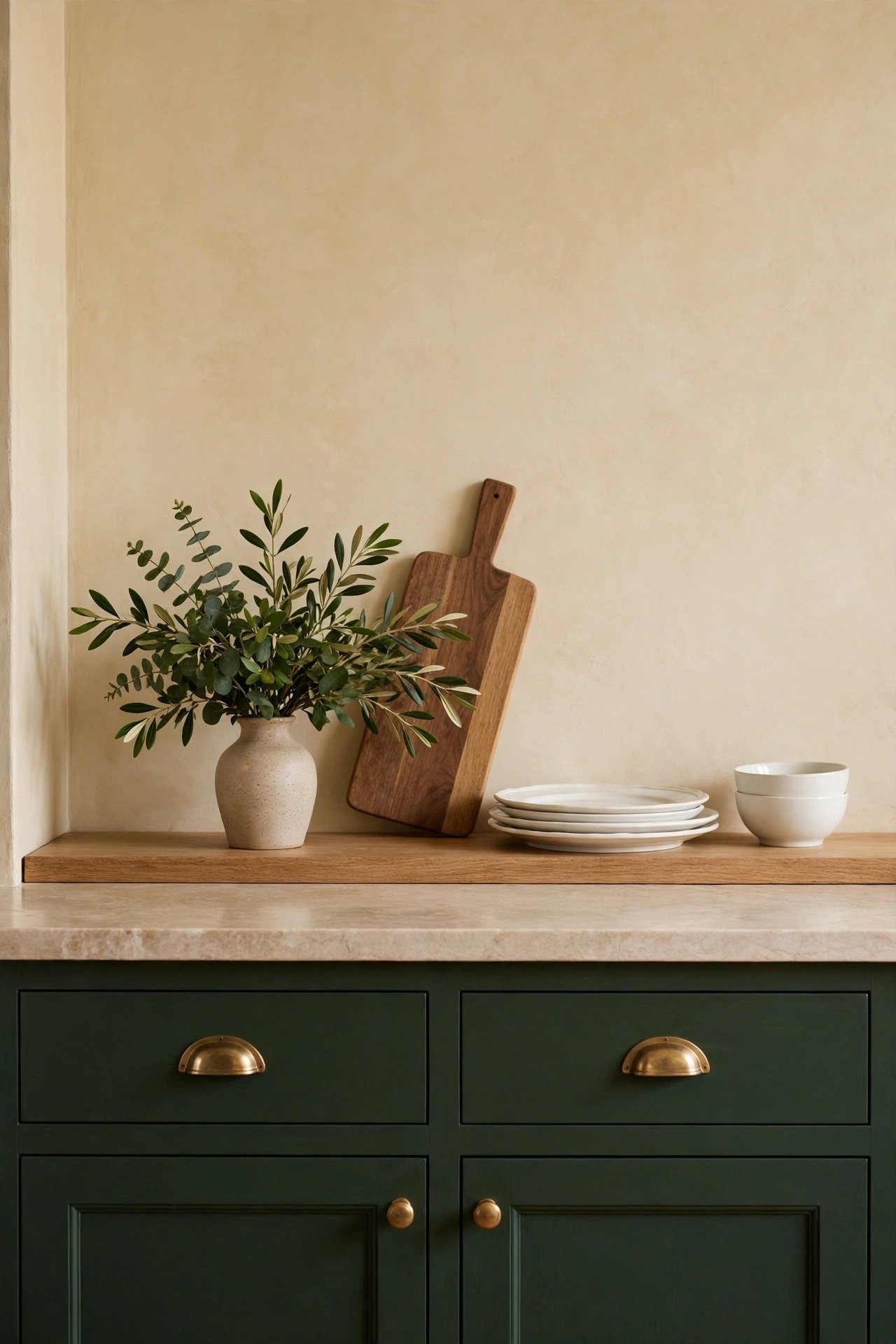
The decorative third is small on purpose. One vase, one plant, or one wooden board per shelf is enough.
A trailing plant softens a shelf edge. A wooden board leaning against the wall adds warmth. A single vase with green leaves adds height.
Rotate the decorative piece every couple of months and the shelf feels new again.
12. What Stays Behind Closed Doors
Some things never belong on open shelves. Chipped plates, stained containers, and anything with a faded label stay behind a door.
Appliances stay off the shelves too. A blender or a food processor on an open shelf looks heavy and collects dust. Keep them in a cabinet and lift them out when needed.
Plastic storage and cleaning supplies stay hidden as well.

3 Mistakes to Avoid
Filling every inch. A shelf packed edge to edge reads as storage, not style. Leave a quarter of each shelf empty and the rest looks chosen.
Mixing too many colors. Five colors on one shelf look like five different kitchens. Two or three colors, repeated across shelves, look like one plan.
Styling once and forgetting it. Dust settles, plants grow, and dishes drift. A five-minute tidy every week keeps the shelves looking styled instead of slowly going wild.
Frequently Asked Questions
How many shelves should a small kitchen have?
Two or three open shelves suit most small kitchens. More than that turns the wall into storage and leaves nowhere for the eye to rest.
What is the one-in-three rule for kitchen shelves?
For every three things on a shelf, two should be useful and one decorative. Two-thirds everyday dishes, one-third beauty — a vase, a plant, or a board.
How do I keep open shelves from looking cluttered?
Leave 20–30% of each shelf empty, repeat two or three finishes, and group things in odd numbers.
Do open kitchen shelves work in a rental?
Yes — most open shelves hang on two brackets and a few screws. Ask the landlord first, and choose a spot where the shelves replace a cabinet you already have.
Open shelves do not need more things. They need fewer things, chosen on purpose.
Start with the reset. Empty the shelves, edit hard, and style one shelf with the rule. The kitchen will feel calmer by dinner.
Browse more kitchen ideas — and see more living room ideas.