



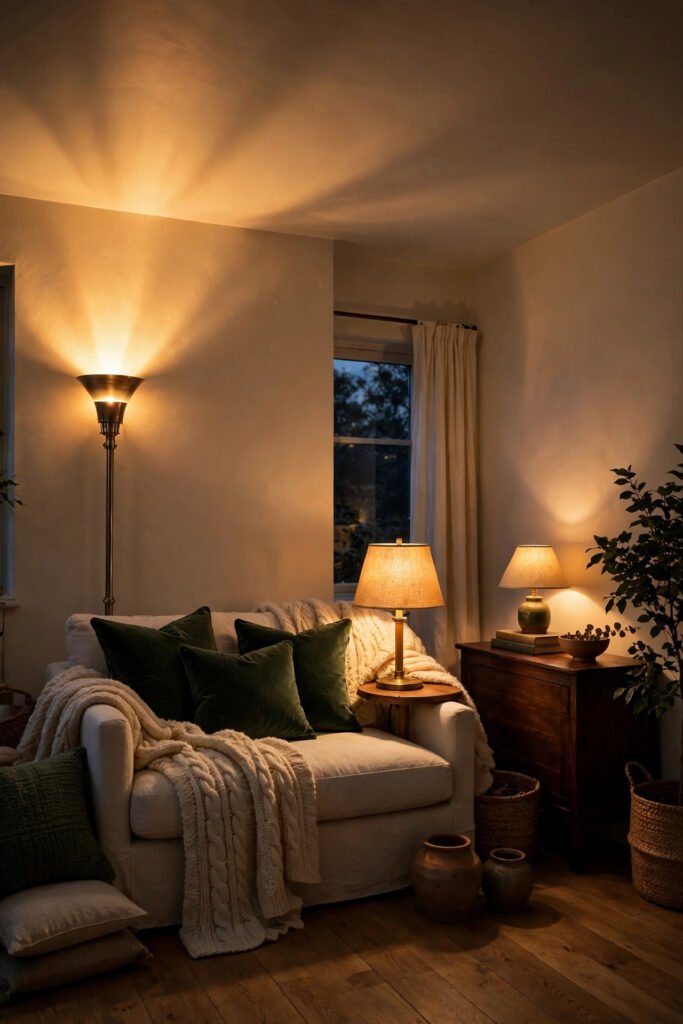
A living room with no overhead lighting goes dark the moment the sun sets.
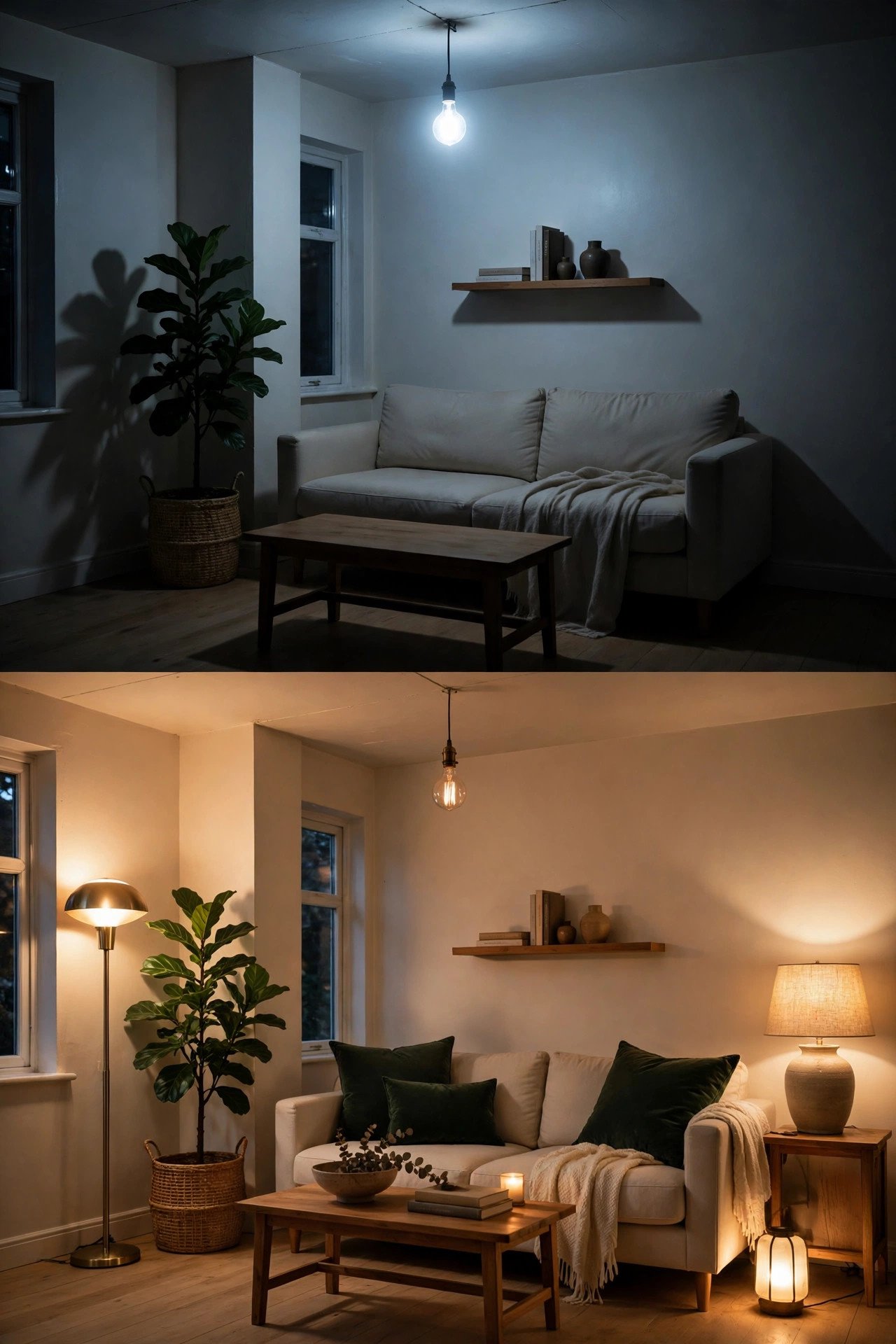
One lamp in a corner is not enough. A bright bare bulb only makes it worse.
The fix is not a bigger lamp. It is a plan: warm, even light at three heights, using plug-in lamps only.
No wiring. No drilling. Nothing a renter cannot undo in an afternoon.
The 3-Height Rule: The Simple Plan That Fixes a Dark Living Room
Most dark living rooms have the same problem: all the light comes from one height.
One lamp on a side table lights one chair. The rest of the room stays in shadow.
The 3-height rule spreads light across three heights. High light bounces off the ceiling and fills the room.
Middle light sits where you sit, and low light glows near the floor to soften the corners.
Three heights, three lamps, one warm colour — that is the whole plan.
Start with one lamp at each height.
Layer 1: Bounce Light Off the Ceiling
The highest layer replaces the ceiling light you do not have.
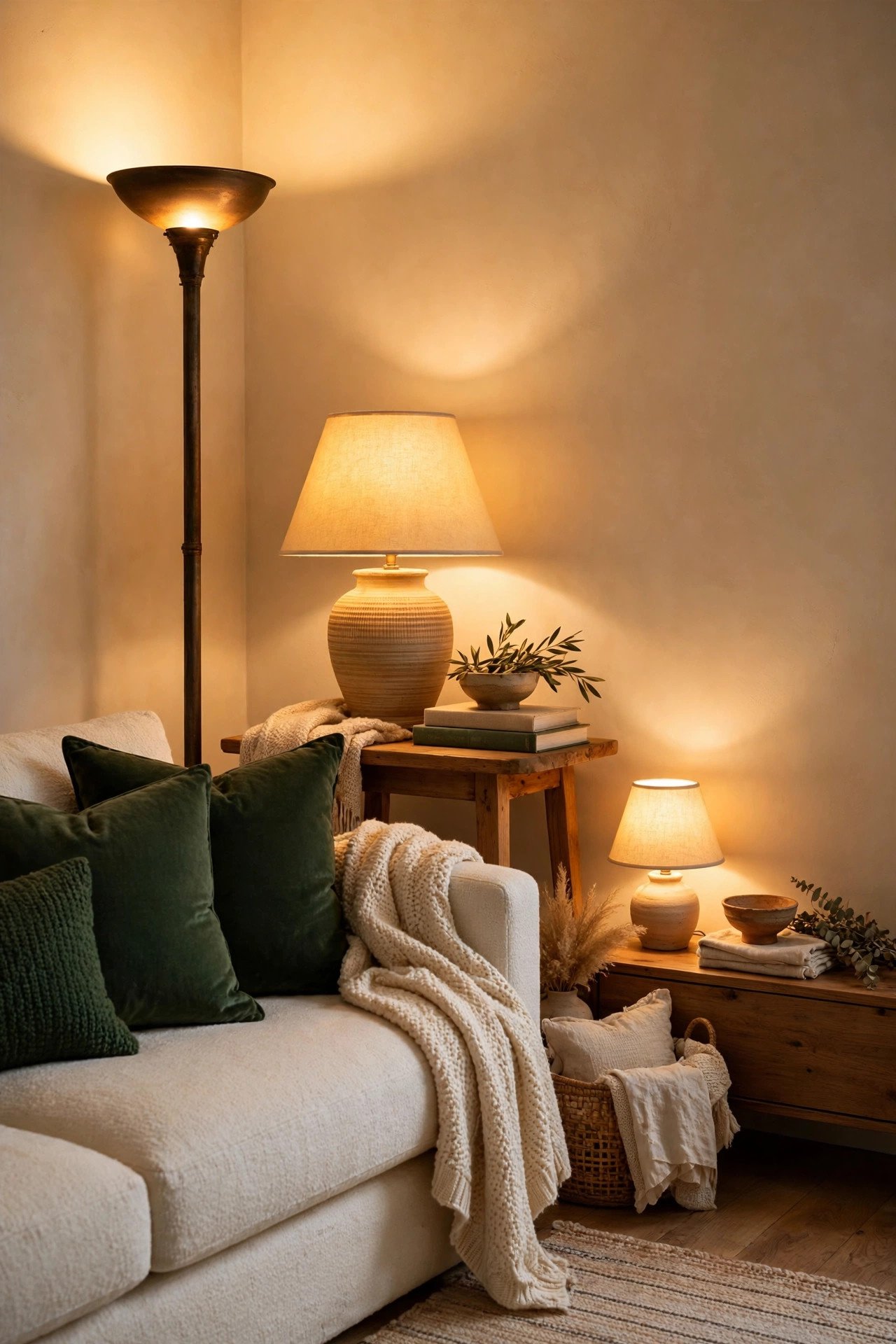
A torchiere floor lamp points upward, so its light hits the ceiling and spreads back down as soft, even light.
It is the closest thing to an overhead light without touching the ceiling.
Put it in the darkest corner or behind the sofa, where its glow washes across the ceiling.
A slim torchiere takes up very little floor space. Keep the bowl clean and the bulb warm.
No torchiere? Try an LED strip along the top of a tall bookcase. The light bounces off the ceiling while the shelf hides the strip.

Layer 2: Light Where You Sit
The middle layer is the light you actually use.
A floor lamp or table lamp at seating height puts warm light beside the sofa — where you read, talk, and relax.
A floor lamp with a fabric shade works well beside the sofa. An arc lamp can reach over the sofa arm.
A table lamp does the same job in a smaller footprint — and it is easier to move.
An empty corner calls for a floor lamp. A side table calls for a table lamp.
Choose a fabric or linen shade. It softens the light and spreads it sideways.
Keep the lamp at about shoulder height when seated, so the light falls on your book, not in your eyes.

Layer 3: Add the Low, Warm Glow
The lowest layer is the one most people skip. It makes the biggest difference to how cozy a room feels.
Low light fills the bottom of the room: a plug-in sconce, a small lamp on a low sideboard, or a flameless LED candle. It softens the shadows the higher layers miss.
Put low light where the room feels empty after dark: a low sideboard, a bookshelf, or a console table.
A plug-in sconce is ideal here — it hangs on a small hook or adhesive strip and plugs into a normal outlet.
No wiring. No electrician.
Low light should be the dimmest layer in the room. Its job is atmosphere, not reading.
Too bright, and it competes with the other lamps.

One Rule for Bulbs: 2700K Everywhere
Matching bulbs matter more than matching lamps.
Bulbs are measured in Kelvin (K). The number tells you the colour of the light.
A 2700K bulb gives a warm, golden light — the colour of a candle. A 5000K bulb gives a cold, blue-white light that feels like an office.
Use 2700K bulbs in every lamp. When all three layers share the same warm colour, the light blends into one soft glow.
When they do not match, the room feels uneven.
The packaging lists the Kelvin number, and many bulbs are also labelled “warm white.”
If a bulb does not say 2700K or warm white, do not mix it in.

Renter-Safe: No Wiring, No Drilling, No Damage
Everything in this plan is plug-in — that is what makes it renter-safe.
No wiring into the wall. No drilling.
When you move out, every lamp unplugs and goes with you.
Smart plugs make the plan easier to live with. Plug each lamp into one, and all three layers switch on together.
UK and Canada readers, take note: plugs and bulb fittings differ by country, so match them to your local outlets.
Hide the cords
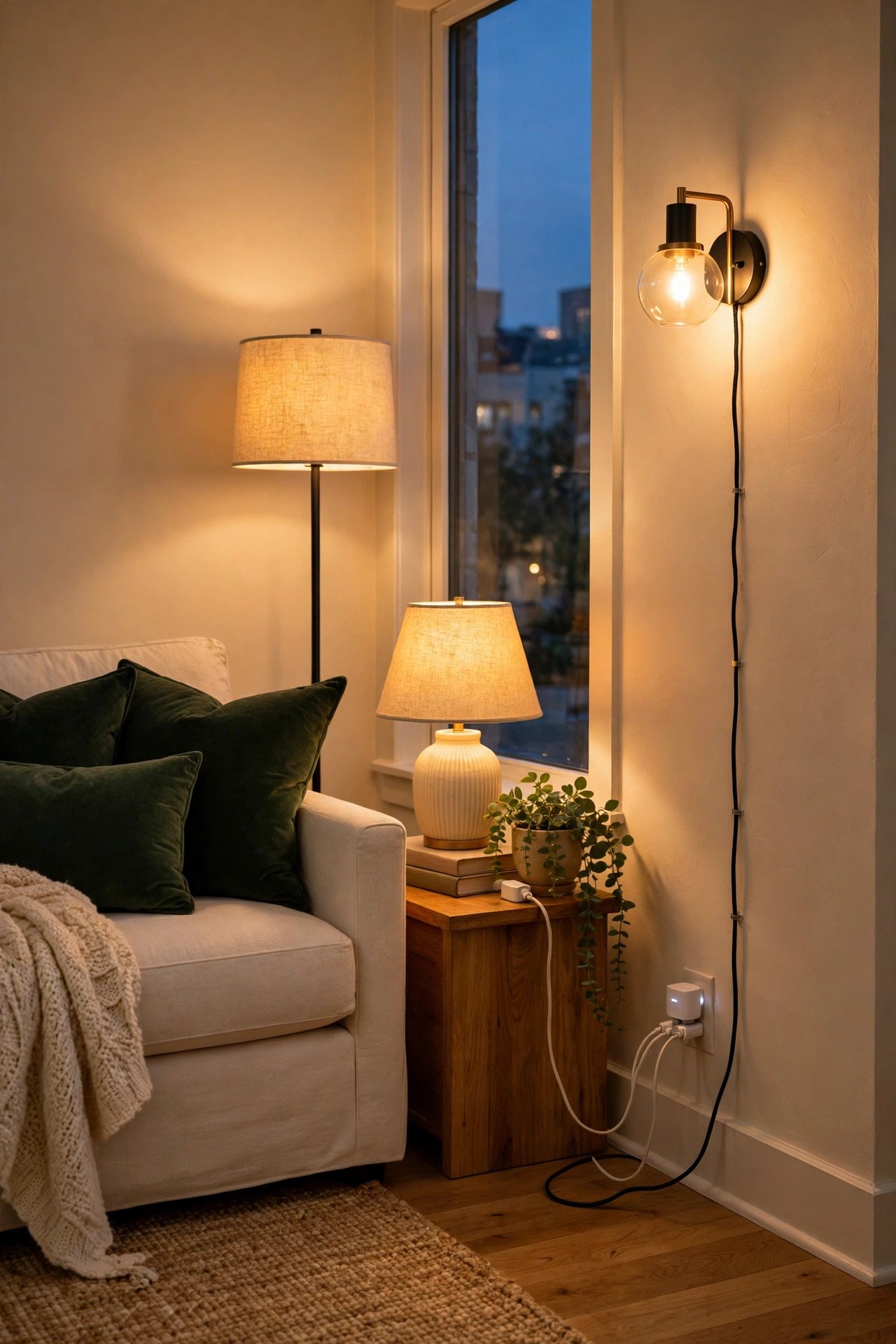
Three lamps mean three cords. Loose cords undo the calm the lighting creates.
Run cords along the baseboard in a slim cord cover. Coil any extra length into a small basket behind the sofa.
A cord cover sticks on without damage. It makes the whole setup look finished.

3 Common Mistakes to Avoid
One harsh lamp. One bright bulb glares at the center and leaves darkness everywhere else. Three softer lights always beat one strong light.
Mixed colour temperatures. A warm lamp on one side and a cool lamp on the other makes the room feel restless. Stick to 2700K.
Nothing low. If all your light sits at one height, the bottom of the room stays dark and the room feels flat. One low light is what makes the room feel finished.
Frequently Asked Questions
How many lamps does a living room need?
Three — one at each height. Add a fourth only if one corner still feels dark.
Can fairy lights replace the lamps?
Fairy lights add a lovely low glow, but they are not bright enough to be the main light.
Use them as a fourth layer, along a shelf or a window. On top of the 3-height plan, not instead of it.
Will this work in a room with dark walls?
Yes — and it matters even more. Dark walls absorb light, so the bounce layer matters most.
A torchiere aimed at a pale ceiling still lifts the room. 2700K bulbs keep dark walls cozy rather than cold.
Do smart bulbs help?
Smart bulbs let you dim all three layers together. A nice extra, not a requirement.
A living room with no overhead lighting does not need a renovation. It needs three lamps at three heights, one warm colour of light, and nothing wired into the wall.
Start with the torchiere. Add the lamp where you sit. Finish with a low glow.
Warmer on the first evening. And every evening after that.
Browse more lighting ideas — and see more living room ideas.


