



The kids’ table is usually an afterthought — a card table in the corner, a few paper plates, children who wander off before dessert.
It does not have to be that way. A kids’ table with things to touch, draw on, and make keeps children seated longer — and it looks wonderful in photos too.
The method is simple: set the table at their height, let them draw on it, and let them help make the decor.

Set Up for Small Hands
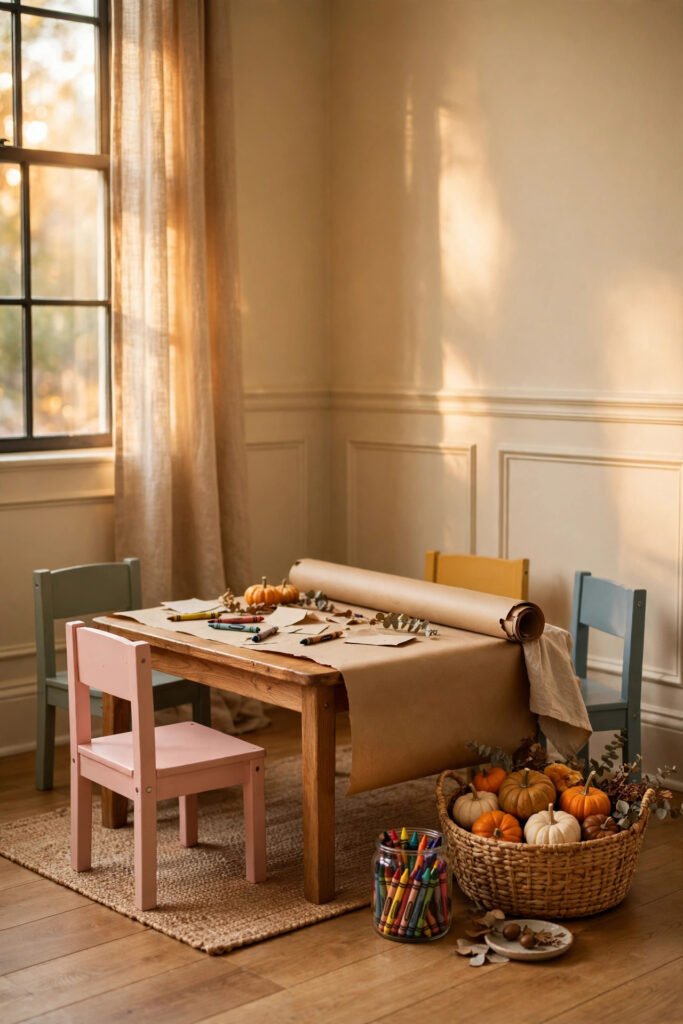
Start with the table itself, not the decor. Children sit happily at a table that fits.
A low table — a kids’ table, a coffee table, or a card table set low — puts the plates at elbow height. Chairs they can climb into alone matter more than matching chairs.
Set the kids’ table a little apart, where spills do not reach the good linen. Paper napkins are fine here, and so is a plastic cup.
The Table They Can Touch
The best kids’ table is one children may touch — things that invite hands, not things that forbid them.
1. The Craft-Paper Tablecloth
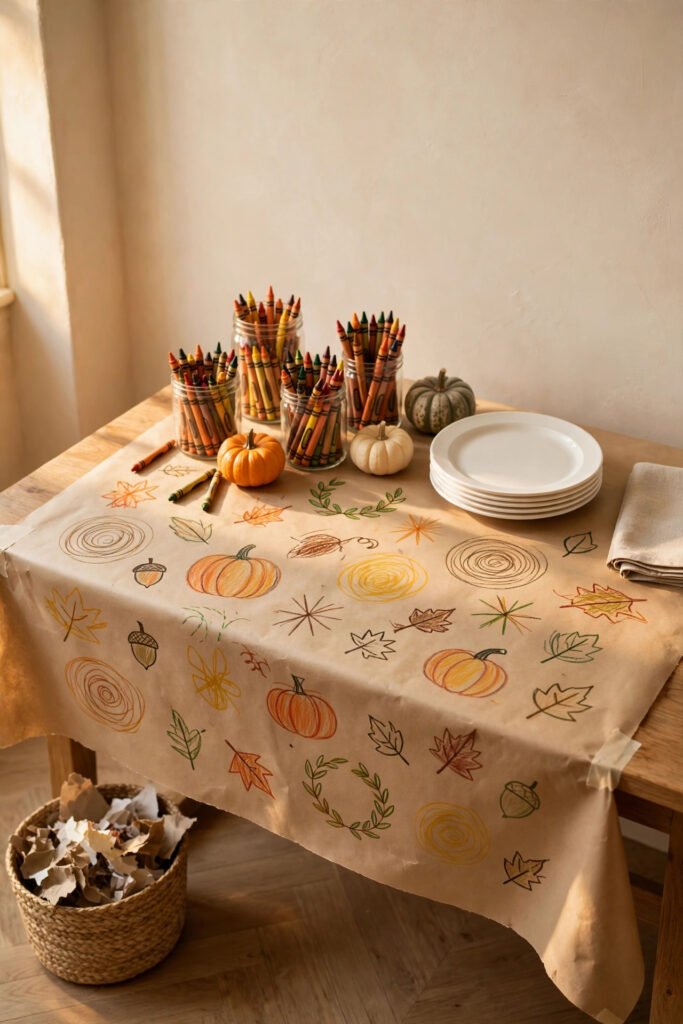
Roll brown kraft paper across the table and tape the ends underneath. That paper is the tablecloth — and the activity.
Children can draw on it all through dinner. Put a few crayons at every seat and let it fill up with pumpkins, leaves, and turkeys.

2. Coloring Pages as Placemats
Print a Thanksgiving coloring page for every seat and use it as the placemat — a turkey, a pumpkin patch, or a cornucopia.

3. Crayon Cups at Every Seat
Put a small jar of crayons at every place setting — eight to ten per cup is plenty, too many and they roll everywhere.
Sort them by warm fall colors. The cup itself is part of the decor.

4. Washable Placemats That Wipe Clean
If the coloring page feels too messy, use wipe-clean placemats instead — a vinyl placemat in a fall color catches every spill.
Wipe it down after dinner and it is ready for next year.

Decor They Make Themselves
Decor children helped make is decor they will not knock over. Make these together the day before, and the table is half dressed by morning.
5. Mini Pumpkins to Decorate
Give every child a mini pumpkin and washable paint or stickers — faces, polka dots, stripes, whatever they like.
Set the finished pumpkins down the middle of the table as the centerpiece. Every child knows exactly which pumpkin is theirs.

6. A Leaf-Garland Runner
Cut paper leaves from rust, gold, and deep green paper and string them on twine. Run the garland down the middle of the table as a runner.
Children can cut the leaves with safety scissors and punch the holes. It takes an afternoon and costs almost nothing, and beats a store-bought runner.

7. Paper Turkeys on the Table
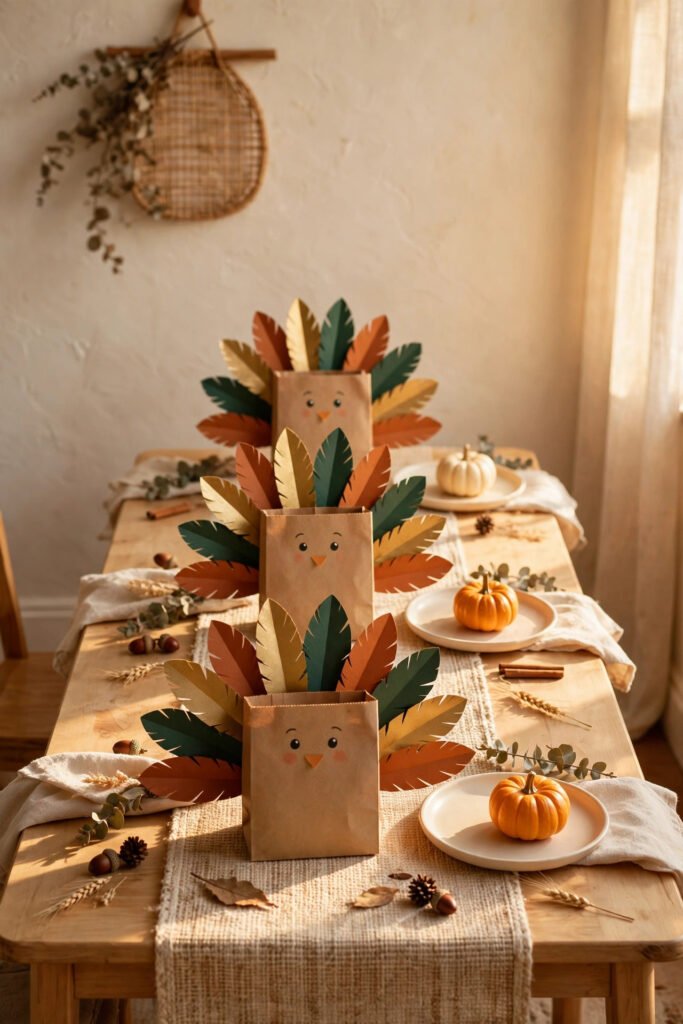
Fold a paper turkey for every seat — a paper bag body, a paper-plate fan of feathers, a small face. Stand one at each plate.
They double as place markers and as something to take home. Use a glue stick, not a gun, and let the feathers be uneven.
8. The Thankful Tree
Put a bare branch in a mason jar and hang paper leaves from it on twine, with blank leaves and a pencil beside it.
Every child writes — or draws — one thing they are thankful for and hangs it on the tree. By dessert, the tree is full.

Place Settings That Feel Special
Children notice their place setting more than anyone. Give the kids’ table the same care as the grown-ups’ — in smaller, sturdier form.
9. Fun Place Cards They Can Keep
Make a leaf-shaped kraft paper card for every child, first name only, leaning against the glass or tucked into the napkin. A leaf beats a plain rectangle every time.
Let them take it home. A card that survives dinner is a small souvenir of the day.

10. The Kid-Height Centerpiece
Keep the centerpiece low — low enough for a child to see over. A shallow tray with three mini pumpkins, pinecones, and leaves is enough.
A tall one blocks faces and gets knocked over. A low one gets admired and left alone.

11. Snack Cups as Decor
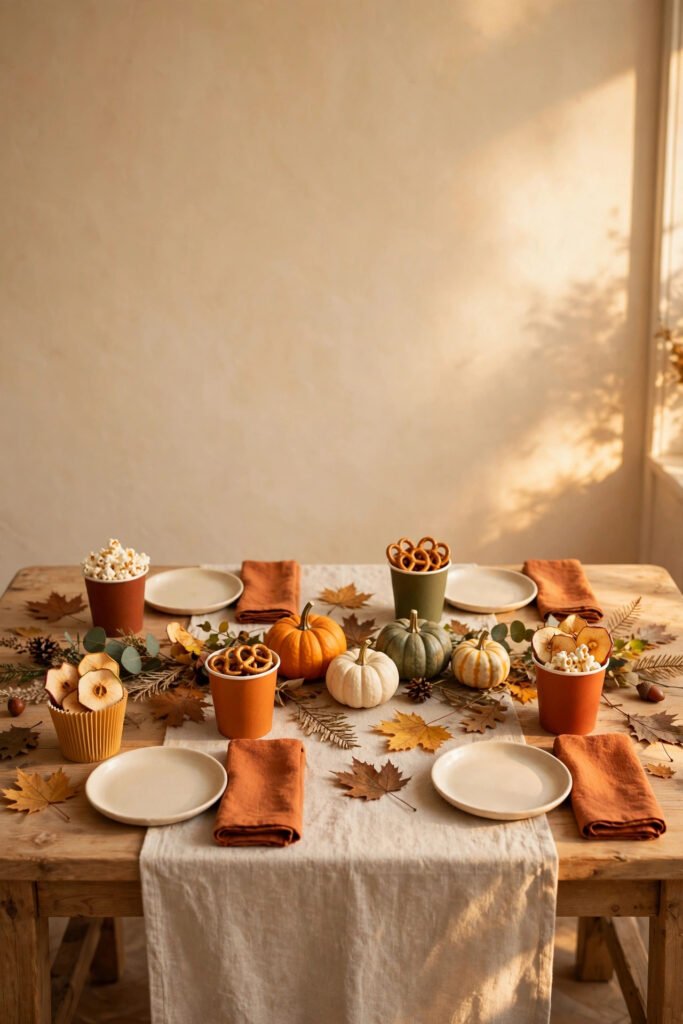
Fill small cups with popcorn, pretzels, or dried apple slices, one at every seat. The snack cup is decor until the food arrives — then it is the first course.
Use paper cups in fall colors, not glass. A tipped paper cup is a two-second cleanup.
12. Soft Seats for Small Sitters
Put a cushion or a folded throw on every chair. Children sit longer on a soft seat, and a cushioned chair looks dressed.
A cushion in rust or deep green ties the table to the rest of the room. Skip anything white — it will not survive the gravy.

Glow, Games and Goodbye
The last three ideas cover the whole evening: a warm glow, something to do, and a cleanup that does not ruin the day.
13. Battery Candles Only
Real candles never go on a kids’ table. Battery tea lights in glass jars give the same glow with no flame.
Set two or three jars down the middle of the table and switch them on at dusk. Children can hold and move them — nothing happens, and that is the point.

14. Table Games Built In
Draw a tic-tac-toe grid on a paper placemat with mini pumpkins as game pieces, or leave a small stack of I Spy cards at the middle of the table.
A game built into the table keeps children seated between courses.

15. The Cleanup-Ready Table
Plan the cleanup before dinner — a washable tablecloth, paper plates, and one bin beside the table for all the paper.
When the table is built to be wiped down, nobody panics over a spill. It should be the easiest table in the house to clear.
3 Mistakes to Avoid
A tall centerpiece. Anything above a child’s eye line blocks faces and invites a bump. Keep it low.
Real candles. A flame on a table full of paper and small hands is a risk no glow is worth. Battery only.
The good dishes. Save the good plates for the grown-ups’ table. Small, sturdy plates and paper napkins keep dinner relaxed.
Frequently Asked Questions
What age is a kids’ table for?
Any age that cannot comfortably reach the grown-ups’ table — usually three to ten. Older children who want to sit with the adults should choose.
How do you keep the kids’ table from getting messy?
You do not — you plan for it. Kraft paper, paper plates, and washable crayons wipe away in minutes.
Can children help decorate the table?
Yes — that is the whole point of this list. Pumpkins, leaves, turkeys, and the thankful tree are all made for small hands.
Do kids need place cards too?
They notice them more than adults do. A leaf-shaped card with their first name makes the smallest guest feel the table was set for them.
A kids’ table does not need to be perfect. It needs to be theirs — low, sturdy, and full of things to do.
Set it the day before, let them help, and let them draw on the tablecloth. The grown-ups will watch it all evening.


